Mating disruption, monitoring and management against Persimmon Clearwing Borer
|
The Persimmon Clearwing Borer (Ichneumenoptera chrysophanes) (PCWB) is a moth of the Sesiidae family. It is found from Cairns in Queensland to Canberra in the Australian Capital Territory and as far south as Melbourne. The borer is the larval stage of the clearwing moth.
Sesiid moths are most distinctive. They look like wasps with narrow clear wings and a large banded body. They are diurnal (fly during the day) and will visit flowers but are rarely seen. Most Australian species inhabit rainforest, but they are very seldom collected. Overseas studies have been advanced enormously by using sex pheromones to attract the adults and many more species may be discovered in Australia. There are more than 1000 species worldwide; 16 are known from Australia. The length of the forewings is 7-8 mm for males and 7-10 mm for females. Adults are brown with large transparent areas on each wing. The body is sparsely covered in yellow hairs, and there is a large tuft of dark brown hairs on the tip of the abdomen. 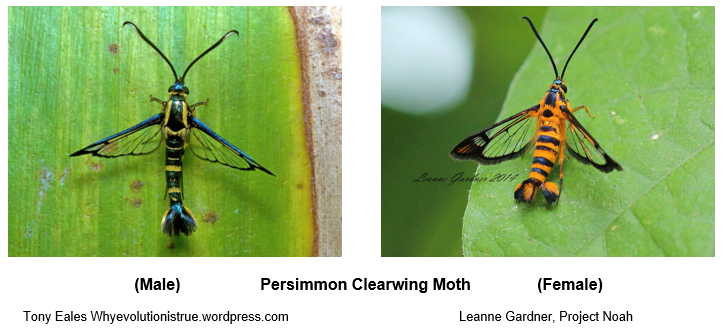
Monitoring with traps
Pheromone traps are used to monitor and alert to the presence and activity of moths. The use of monitoring traps in areas treated with pheromones will not be effective as the pheromone plume will not allow male moths to find the trap, as traps use the same pheromone as attractants. Traps are more effective when placed in surrounding vegetation where pheromone concentrations are lower. Traps can attract moths from a distance, you don’t need to place the traps in infested trees. Place traps in locations that will be convenient to monitor, check the traps once a week for moths. Climatic factors, PCWB development & timing Temperature appears the controlling factor affecting rate and timing of development stages of the moth. Compared with temperate fruits and plantation trees such as ash, where there is only one distinct peak in moth numbers in spring-early summer, it appears with persimmon clearwing moth that there are at least four major peaks in moth numbers occurring in about the same time periods each year in south-east Queensland:
Clearwing Borer Mating Disruption Agent Mating disruption relies upon the release of large quantities of synthetic sex pheromones to prevent males from finding females, and delaying mating that results in unmated females laying infertile eggs and mated females the delay in mating results in reduced fertile eggs being laid or none at all. Clearwing moths have been shown to be quite susceptible to mating disruption using pheromone dispensers. Significant reductions in both male moths and larvae were demonstrated in treated orchards with pheromone dispensers compared with the untreated (Vickers, 1997-2000). Efficacy of pheromones on borer species present in South Australia and Victoria is not known. Further studies are needed to correctly identify the species of these regions. Many growers found that a single application of pheromone was ineffective in reducing infestations of clearwing moth compared with no applications. In contrast, growers who applied the pheromones twice during the season achieved near 100% control (Figure 6). They applied the first dose in September and the second in January. It is advisable to replace the pheromone dispensers (Shin-Etsu Carmenta MD Pheromone) after 90 days, and particularly where trap counts indicate continued clearwing moth activity in the orchard. Placing pheromone dispensers at the edge of native bush adjacent orchards is likely to enhance the mating disruption effect within the orchard, particularly for orchards less than three hectares in size. 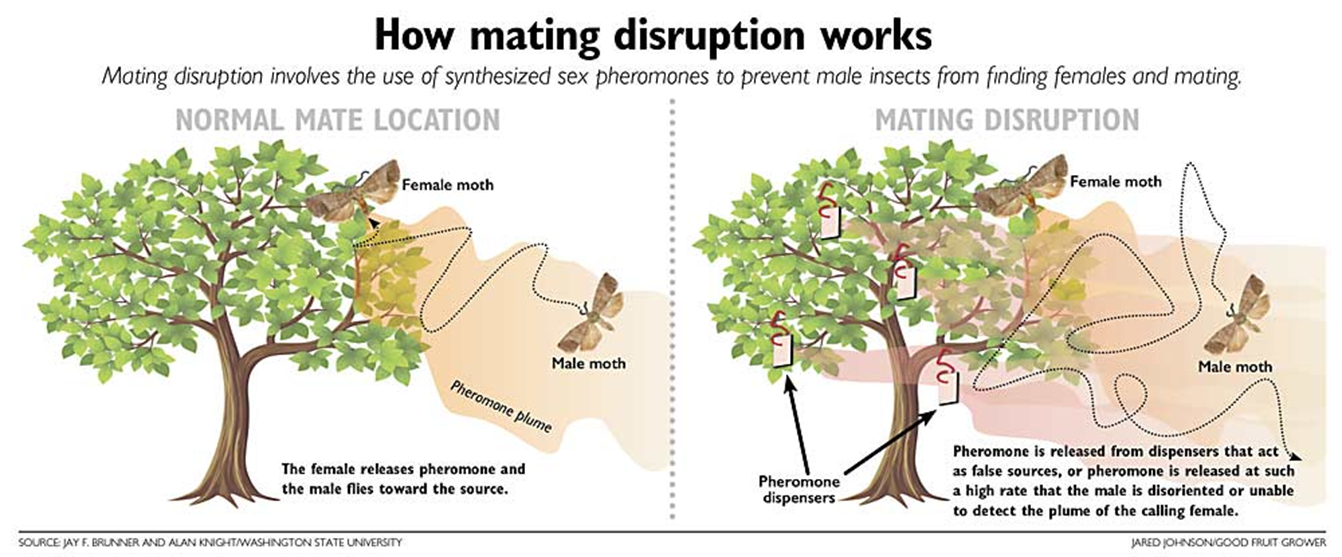
Male months attracted by the female pheromone become tired, confused and overwhelmed when they can’t locate the ‘female’ moth. Mating may occur but is significantly delayed resulting in reduce viability of eggs.
PCWB Mating Disruption Agent Program
Place pheromone dispensers in every tree for ‘Izu’ and ‘Fuyu’ and every second tree, staggered down each row for ‘Jiro’. The number per hectare will depend on tree and row spacings, but it is recommended that between 1,000-1,500 dispensers be used per hectare.
PREVENTION IS THE KEY TO CONTROL
Control relies on preventing larval establishment underneath the bark. Once under the bark, chemical control is usually ineffective. Depending on clearwing moth levels, use of mating disruption pheromones alone may not be sufficient to achieve control. Size and location of orchards can influence the success of mating disruption. Native vegetation provides an untreated area from which mated females can fly into treated orchards to lay eggs. Proximity to these areas may limit the effectiveness of mating disruption pheromones. Border sprays with insecticides can reduce the build-up of clearwing moth in surrounding vegetation, which can also aid the effectiveness of mating disruption. Some growers treat surrounding vegetation with pheromones as an additional control measure. Mating disruption aims to keep populations low rather than providing total control. Orchards with large background populations may need to use an integrated approach to reduce moth numbers to allow pheromones to be effective. Additional supportive insecticide sprays may particularly be required in the first year that mating disruption is employed to reduce numbers of moths to a level where control can be maintained by pheromones alone. |
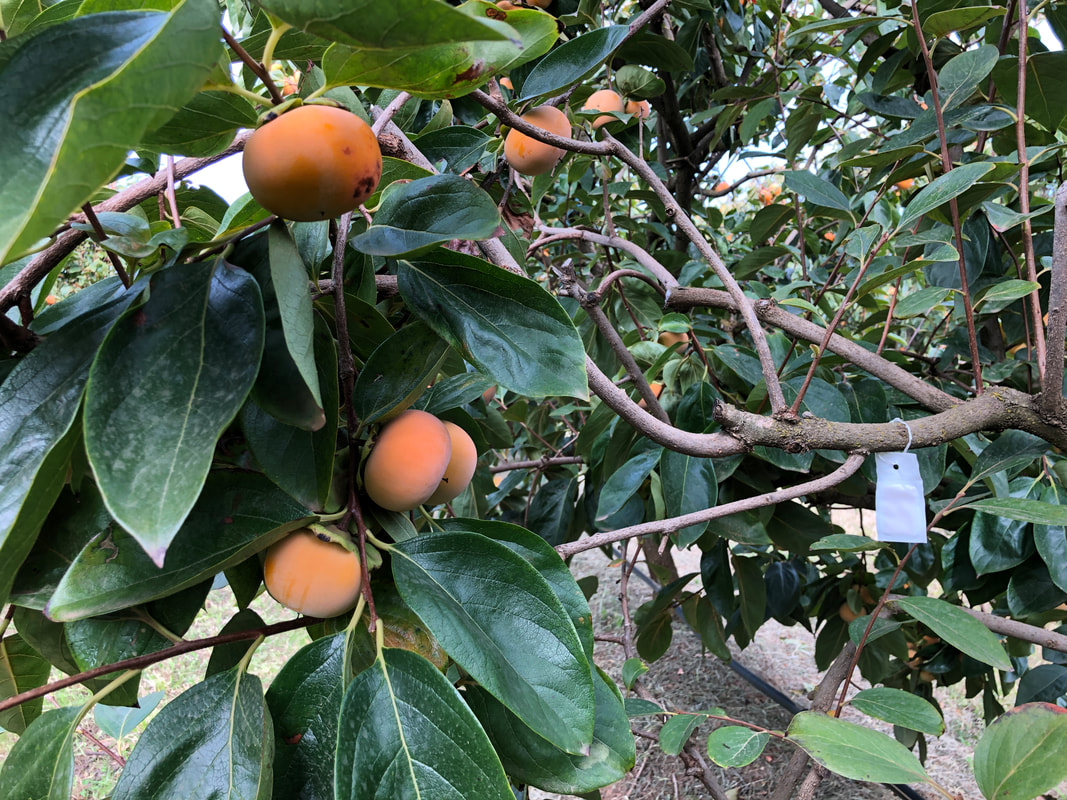
Clearwing Borer Mating Disruption Agent for Persimmons
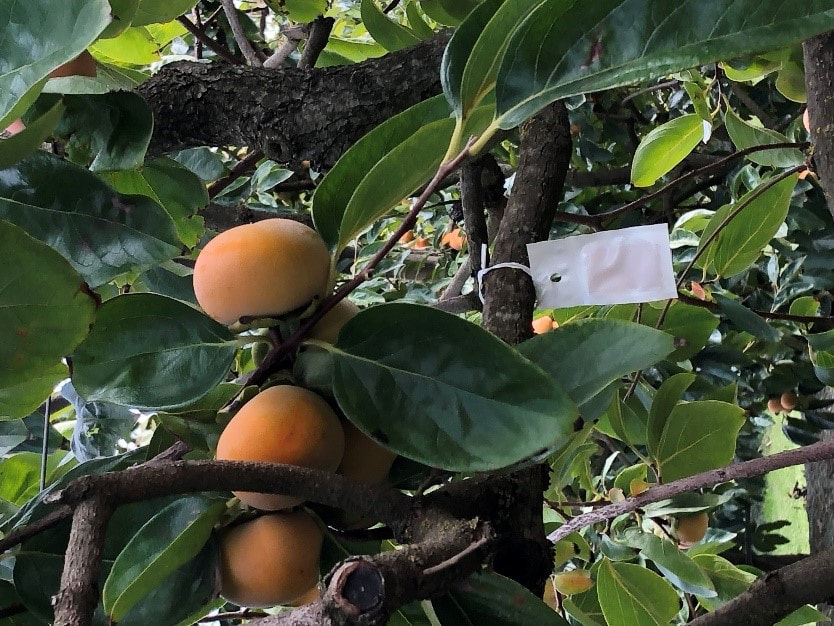
Persimmon Clearwing Borer MD

| ||||||